Slideshow of us at St Anne's

Monday, November 28, 2011

Proud to be Catholic

Excerpts of an article written by non-Catholic; Sam Miller - a prominent Cleveland Jewish businessman:

"Why would newspapers carry on a vendetta on one of the most important institutions that we have today in the United States, namely the Catholic Church?

Do you know - the Catholic Church educates 2.6 million students everyday at the cost to that Church of 10 billion dollars, and a savings on the other hand to the American taxpayer of 18 billion dollars. The graduates go on to graduate studies at the rate of 92%.

The Church has 230 colleges and universities in the U.S. with an enrollment of 700,000 students.

The Catholic Church has a non-profit hospital system of 637 hospitals, which account for hospital treatment of 1 out of every 5 people - not just Catholics - in the United States today.

But the press is vindictive and trying to totally denigrate in every way the Catholic Church in this country. They have blamed the disease of pedophilia on the Catholic Church, which is as irresponsible as blaming adultery on the institution of marriage.

Let me give you some figures that Catholics should know and remember. For example, 12% of the 300 Protestant clergy surveyed admitted to sexual intercourse with a parishioner; 38% acknowledged other inappropriate sexual contact in a study by the United Methodist Church, 41.8% of clergy women reported unwanted sexual behavior; 17% of laywomen have been sexually harassed. Meanwhile, 1.7% of the Catholic clergy has been found guilty of pedophilia. 10% of the Protestant ministers have been found guilty of pedophilia. This is not a Catholic problem.

A study of American priests showed that most are happy in the priesthood and find it even better than they had expected, and that most, if given the choice, would choose to be priests again in face of all this obnoxious PR the church has been receiving.

The Catholic Church is bleeding from self-inflicted wounds. The agony that Catholics have felt and suffered is not necessarily the fault of the Church. You have been hurt by a small number of wayward priests that have probably been totally weeded out by now and a number of bishops who failed to act.

Walk with your shoulders high and your head higher. Be a proud member of the most important non-governmental agency in the United States.

Then remember what Jeremiah said: 'Stand by the roads, and look and ask for the ancient paths, where the good way is and walk in it, and find rest for your souls'. Be proud to speak up for your faith with pride and reverence and learn what your Church does for all other religions.

“Be proud that you're a Catholic."

Received by email from Sr Fabiola OP

Thursday, November 17, 2011

The Quest to Know

The Quest to Know November 2011By Tom Martin Thomas Martin is the O.K. Bouwsma Chair in Philosophy at the University of Nebraska at Kearney. Along with his fellow colleagues who are dedicated to the study of the Great Books, he teaches the works of Plato, Aristotle, G.K. Chesterton, Dostoyevsky, and Solzhenitsyn, to mention a few. “Who you? Why you here?” Grace Rose Mar­­tin, my three-year-old granddaughter, asked Anna Martin, her 91-year-old great-grandmother, at a family reunion. Lo and behold, Grace is a philosopher: She has a sense of wonder and the desire to know. Philosophy begins in wonder when we affirm that sentiment is anterior to reason. In fact, if I did not know better, I would have thought Grace knew her purpose by having read the first sentence of Aristotle’sMetaphysics, “All men by nature desire to know.” Grace’s questions are as fundamental to being human as childhood is to becoming an adult. Her questions were answered on the literal level: “I am Anna Martin, and I am here for the wedding.” My mother’s answers satisfied Grace — for the moment — but they will not stop her from continuing to ask a plethora of questions as she seeks to weave coherence out of her surroundings. As Grace matures, the philosophical muse of the examined life must turn inward if she is ever to fulfill herself as an adult. In other words, her questions must become “Who am I?” and “What am I doing here?” Grace is currently untroubled by self-examination as she bounces about in play. She is, as all children are, “in the now,” a state of innocence in which each moment is sparkling new. Philosophers have long thought the present moment — this moment — to be the least occupied of places, as most adults live in memories or in anticipation of future events. The ancient Greeks had two different senses of time. There is Kronos, which is time relating before to after, time as the future passing through the present to become the past. From this Greek word we derive such terms as “chronic” and “chronology.” An illness is chronic if it lasts a long time. Chronology is the arrangement of events or dates in the order of their occurrence. In addition to Kronos, there is Kairos, which is used when speaking of the time, appropriate time, or seasonal time. This time cannot be measured. In weaving, for example, it is the time for the weaver to draw the yarn through a gap that momentarily opens in the warp of the cloth being woven. In politics it is the speech needed to capture the eternal significance of the moment in which something needs to be said before the moment passes and the opportunity is gone forever. Abraham Lincoln’s “Gettysburg Address” is an example of how words are drawn down to fix the moment that transcends the wear of time by the person who grasps the eternality of the moment in which the human spirit stands still:

It is rather for us to be here dedicated to the great task remaining before us — that from these honored dead we take increased devotion to that cause for which they gave the last full measure of devotion — that we here highly resolve that these dead shall not have died in vain — that this nation, under God, shall have a new birth of freedom — and that government of the people, by the people, for the people, shall not perish from the earth.

Kairos is not measurable; it is an eternal quality rather than a quantity that intersects with Kronos. Lin­coln’s words still ring true. So there is the time span of a person’s life, which can be measured chronologically from beginning to end, and there is also the span of time when the timeless intersects with the temporal, weaving context into what would otherwise be disconnected moments in an aimless life. Baptism is an example of a moment when the timeless enters time and starts a person on a spiritual journey for the sake of his soul. Thomas Merton, in New Seeds of Contemplation, notes, “What is really new is what was there all the time. I say, not what has repeated itself all the time; the really ‘new’ is that which, at every moment, springs freshly into new existence. This newness never repeats itself. Yet it is so old it goes back to the earliest beginning. It is the very beginning itself, which speaks to us.” In wonder, Grace is on the edge of her unique “newness,” looking out on her world for the first time. The joy of being a child is that you do not know you are a child. Grace, according to G.K. Chesterton, is in her own cosmos: “Each one of us is living in a separate cosmos. The theory of life held by one man never corresponds exactly to that held by another. The whole of man’s opinions, morals, tastes, manners, hobbies, work back eventually to some picture of existence itself which, whether it be a paradise or a battlefield, or a school or a chaos, is not precisely the same picture of existence which lies at the back of any other brain.” While Ptolemy was wrong to assume that the earth was the centre of the cosmos, Grace is the centre of her universe; she is a “micro-cosmos” of the cosmos. As a part, she mirrors the whole. When Grace looks out from the windows of her soul, she draws a bead that begins with herself and ends on the horizon or upon whatever she is looking. Man is the starting point of any line that can be drawn between any two points in space; it was he who drew stars into constellations. There are no points in the universe from which to measure that do not begin in a living soul. But Grace is not drawing from scratch; she is endowed with an intellect and is forming her mind each time she looks out from herself and wants to know the who, what, and why of everything in her search for order. Grace’s quest — Who you? Why you here? — shows that she has a soul that is meant to know its end. She is being brought up in the moral virtues, which are the sinews, as it were, of family life. As Aristotle says, “Intellectual virtue or excellence owes its origin and development chiefly to teaching and for that reason requires experience and time. Moral virtue, on the other hand, is formed by habit…[and] none of the moral virtues is implanted in us by nature, for nothing which exists by nature can be changed by habit.” Grace is not moral by nature, any more than she speaks by nature; however, everyone has the potential to be moral and to speak by nature. In Aristotle’s terms, we are provided with the capacity first and display the activity afterwards. Grace is Everyman: She has fallen into a net, a context, in which she is woven to her parents and relatives, her lifelines. It is fitting that Grace asked her questions of her great-grandmother: The progeny standing before the oldest living source of her life, asking for an explanation, youth in need of tradition. Ludwig Wittgenstein noted, “Tradition is not something a man can learn; not a thread he can pick up when he feels like it; any more than a man can choose his relatives.” Each person is a continuation of his thread on a continuum. A first name is uniquely individual and a last name ties a man to his people. Tradition is our skin. We do not choose our parents, nationality, or the century in which we are born — the context of our lives. We are woven bodily to the earth and spiritually to our parents in our adventure that continues their history. Our parents are our lifelines, entrusted with setting the tension for the formation of the virtuous life that is essential for our spiritual growth and the achievement of our potential. Aristotle taught that the primary source of moral virtues is their presence in other beings. Grace has fallen onto a moving platform yet is at the centre of her household. In time, she will get over the shock of being in the world, as her parents bring her down to earth, schooling her in the language of household virtues through fairy tales, parables, and chores, which she currently demonstrates when she suggests, “Let’s play family.” Moving from childhood to adulthood includes the awareness of the timelessness of the opportunities that are present in each moment. Each moment presents itself as a virtuous opportunity. There is a right choice in each moment that is relative to each person. Being virtuous requires having one’s string pulled. Good parents start pulling a child’s string by teaching him to sit up, say please and thank you, be kind to others, and take pride in himself. The intellectual virtues start at home and are continued in school. The word “leisure” in Greek is Skole, and in Latin scola, from which comes the English word “school.” Given that man is born ignorant and by nature desires to know, Aristotle states that man sets about learning only after “all the necessities of life and things that make for comfort and recreation” have been achieved. In order to satisfy the quest to know, man needs to have the opportunity for leisure. In this respect, school is the harbour where one is outfitted for the journey of life. The university is a playground, the leisure ground in the formation of a person’s self-discovery. It is at this point that a student decides to focus on a specific course of study and centre his life on being a nurse, builder, banker, EMT, radiologist, exercise physiologist, farmer, teacher, and so on. This is well and good. In fact, Aristotle noted in the fourth century B.C. that each person by nature has a function, which is his calling in life. A well-governed state would be one in which everyone is suited to his function, the job he is meant to do by nature, and in which work is done for the higher stakes of the greater good. This, Aristotle thought, is a good of the soul as opposed to a good of the body, an external good like a house, which, though useful, is not an end in and of itself, as are the ends of life. The individual’s function should follow his formation if his life is to be virtuous. And the virtues are eternal truths, the light emanating from Kairos that presents a mindful person with the right thing to do in this, the Kronos of his life. There are permanent moments in every man’s life. There is a right thing to do in every moment. In effect, college is set up like a loom where the past is woven into the present. Everything we learn is behind us and a good memory is essential for a developed mind. Within education, the purpose of being a teacher on the playground of the cosmos is to transmit the truth of disciplined thought to the next microcosm, whose soul is endowed with the faculty of reason. Being a teacher is like being a grandparent who is asked by his grandchild “Who am I?” and “What am I doing here?” So, “Who you? Why you here?”

Thursday, November 3, 2011

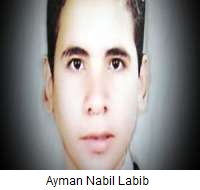
Egypt: Christian student murdered for refusing to remove crucifix

Ayman Nabil Labib, a 17-year-old Coptic Christian student, was murdered by Muslim classmates after refusing to remove a crucifix he was wearing, the Assyrian International News Agency is reporting.

The murder, which took place on October 16 in the central Egyptian town of Mallawi, took place after a teacher asked Labib to cover up a tattooed cross on his wrist. Labib refused, instead uncovering a cross necklace.

“The teacher nearly choked my son, and some Muslim students joined in the beating,” said Labib’s father.

“They beat my son so much in the classroom that he fled to the lavatory on the ground floor, but they followed him and continued their assault,” the victim’s mother added. “When one of the supervisors took him to his room, Ayman was still breathing. The ambulance transported him from there dead, one hour later.”

May his soul, and the souls of all the faithful departed, through the mercy of God rest in peace.

Tuesday, May 24, 2011

Ascension Day Mass Times

Thursday 2nd June

THE ASCENSION OF THE LORD- SOLEMNITY (Holy Day of Obligation)

ASCENSÃO DO SENHOR- SOLENIDADE (Dia de Obrigação)

7:45am – with the Dominican Convent School

10 horas – em Portugês Schoenstatt Bedfordview

3:30pm – Children’s Mass (All welcome)

6:30pm

Go to our website for map and directions

Readings are proper to the solemnity.

(Adoration of the Most Blessed Sacrament after the School Mass)

Tuesday, April 5, 2011

The next Rwanda? ‘In all districts of Abidjan there is gunfire’

A massacre in a Roman Catholic mission compound in the heart of the Ivory Coast’s cocoa-producing region could come to be seen as a crucial moment in the West African state’s escalating civil war.

Reports are mounting of atrocities by both sides in the conflict − those loyal to head of state Laurent Gbagbo, besieged in his presidential residence in Abidjan, Ivory Coast’s commercial capital, and those who follow northern leader and president-elect Allasane Ouattara.

31301679920035

Events at the Italian Salesian Roman Catholic mission in Duekoue increasingly echo a notorious church massacre during the Rwandan genocide in 1994.

Early reports suggested that more than 800 people, largely from the Gbagbo-supporting Gueré tribe, were killed in a single day at the sprawling Salesian Saint Teresa of the Child Jesus mission in Duekoue, 300 miles west of Abidjan towards the Liberian border. The attackers seem to have been largely soldiers descended from Burkina Faso immigrant Muslim families loyal to Ouattara.

Late yesterday the Roman Catholic charity Caritas said more than 1000 people were massacred in Duekoue. A Caritas spokesman said Caritas workers visited the town and reported seeing a neighbourhood filled with bodies of people who had been shot and hacked to death with machetes.

More than 5000 Rwandan Tutsis and moderate Hutus sheltering in the Roman Catholic church at Nyarubuye were massacred by Hutu militiamen on April 12, 1994. Nyarube became the supreme symbol of the Rwandan genocide, in which some 800,000 people were murdered in just a hundred days.

The Duekoue massacre seemed to have stiffened the resistance, at least temporarily, of Gbagbo. His 10-year grip on power in Ivory Coast looked as though it was in its final hours on Friday after Outtara’s New Forces (NF) northern army encircled both his residence and the presidential palace, battling to unseat the man who has refused to recognise his defeat in last year’s election.

But yesterday forces loyal to Gbagbo – a southern Roman Catholic who has vowed not to step down in spite of being narrowly defeated by Outtara in a presidential election last November – put up stiff resistance to the New Forces and re-established control of the headquarters of the state TV station, RTI. It went off the air for 24 hours after it fell to Outtara’s soldiers, but by yesterday was again broadcasting pro-Gbagbo propaganda, calling on people to “resist the enemy”.

With control of RTI back in the hands of Gbagbo and updated reports being received intermittently from Duekoue, human rights organisations raised fears of widespread killings in a situation described in a United Nations document obtained by Reuters as “one of generalised chaos”.

Corinne Dufka, senior Africa researcher of Human Rights Watch, said: “We’re extremely concerned about the potential for mass atrocities.” She added: “Given Gbagbo’s prominent use of violent militia groups and the state-controlled media’s incitement to violence, we are asking UN peacekeepers to do everything in their power to protect non-combatants.”

However, the early evidence reported by Italian media from Duekoue suggests the Saint Teresa mission massacre was carried out by Outtara’s NF forces. “The incident is particularly shocking by its size and its brutality,” said Dominique Liengme, head of the International Committee of the Red Cross (ICRC) delegation in Ivory Coast.

“Red Cross representatives themselves have seen a huge number of bodies [at the mission station],” said ICRC spokeswoman Dorothea Krimitsas in Geneva. “There is no doubt that something on a large scale took place in this city, on which the ICRC is continuing to gather information. Everything indicates that this was inter-ethnic violence.”

Duekoue was one of the many centres overwhelmed by the NF as its soldiers, wearing “magic” amulets, neckbands and masks, swept through the country last week in a well-organised assault, bringing more than 80% of Ivory Coast under fragile control.

For days the national army, under Gbagbo’s control, put up almost no resistance and its head, General Phillippe Mangou, fled to the home of the South African ambassador with his wife and five children. However, after several days of easy progress, the NF is now facing Gbagbo’s most reliable fighters, the roughly 2500-strong elite Republican Guard, clustered in Abidjan along with remaining regular army troops.

Tens of thousands of people have fled the fighting around Duekoue and Oxfam reports more than 120,000 people from the area have crossed the nearby border with Liberia in the last week-and-a-half.

At times the Saint Teresa mission station in Duekoue has housed as many 20,000 refugees fleeing the fighting. Since late last year there have been innumerable killings in the area prior to the recent slaughter, with hundreds of shops in the city centre set ablaze.

The cocoa economy around the city has collapsed as a result of an embargo imposed by the European Union following Gbagbo’s refusal to accept the presidential election result. According to official figures, Ouattara won with 54% of nearly five million votes cast nationally. But the head of the Constitutional Council alleged vote-rigging in the Ouattara-controlled north and declared Gbagbo the victor with 51% of the votes cast. The country then returned to civil war after enjoying a tenuous peace since 2005.

The inter-ethnic violence around Duekoue that has driven the Gueré tribal people into the mission station mirrors the kind of ethnic tensions that prevail throughout most of Ivory Coast. The Gueré ancestors had possessed the land for centuries before people from the arid north and from neighbouring Burkina Faso and Mali began settling there 40 years ago, seeking work as cocoa prices boomed on world markets. Ivory Coast historically has produced more than 40% of the world’s supply of beans for production of the developed world’s chocolate products.

Ethnic tensions and xenophobic killings began when the world price of cocoa nosedived in the 1990s and some five million immigrant workers were suddenly perceived as a burden. The southern-dominated Government introduced a new xenophobic concept of “Ivorité”, or Ivorianess. Vigilantes began killing “foreigners” – the majority of them Muslims and many of them third-generation immigrants – on plantations and in shanties on the edges of the towns as the country, once the richest in West Africa, descended into civil war.

The mission killings began the day after Outarra’s fighters overwhelmed the town. A thousand UN peacekeeping soldiers, mainly from Pakistan and Vietnam and based in Duekoue, did nothing to stop the killing, according to aid workers. The aid workers spoke by phone to news agencies on condition of anonymity for fear of endangering relations between the NF forces and the UN.

Outtara yesterday issued a statement in Abidjan blaming the killings on retreating Gbagbo forces, a version of events contradicted by aid workers and missionaries. Spokesmen for Gbagbo in turn rejected Outtara’s allegations.

Krimitsas said: “There is a risk that this kind of event can happen again and hope that by calling today again for protection for the civilian population, we hope that such events can be avoided in the future.”

Rupert Colville, spokesman for the UN’s High Commissioner for Human Rights, said: “We’ve had unconfirmed reports of quite serious human rights violations committed by the pro-Ouattara forces.”

A spokesman for the Saint Teresa Salesians said so many refugees were arriving at mission compounds it was impossible to provide them all with shelter from seasonal rains.

Peter Pham, director of the Africa Centre at the Atlantic Council in Washington DC, said Duekoue was an important strategic gain for Outtara as it sits along a major north-south transit corridor linking the cocoa heartland with the cocoa exporting port of San Pedro. It also controls access to northeastern Liberia which has supplied men and arms to Gbagbo’s forces, he said.

As heavy fighting continued yesterday for a third day in Abidjan, Africa’s sixth largest city with more than four million people, Gbagbo’s location was unclear. The heaviest fighting seemed to be around the Gbagbo-controlled Agban military base in the city centre.

A soldier accompanied by a dozen members of Gbagbo’s Defence and Security Forces, appeared on RTI-TV and read a statement calling for the mobilisation of troops to protect state institutions, asking for “all the staff of the armed forces” to join five units in Abidjan.

The broadcast suggests forecasts of Gbagbo’s imminent defeat and exile are wide of the mark.

Residents of Abidjan said yesterday they are scared to leave their homes. Many reported running out of food, with shops closed and widespread looting. Valerie Bony, a correspondent for the BBC in Abidjan, reported: “In all districts of Abidjan there is sporadic gunfire. There is a lot of looting going in the city.”

She added that young, pro-Gbagbo supporters in several districts have been armed by Gbagbo forces, according to witnesses.

http://www.heraldscotland.com/news/world-news/the-next-rwanda-in-all-districts-of-abidjan-there-is-gunfire-1.1094251

Wednesday, March 30, 2011

Exorcists are overwhelmed by requests to evaluate claims of possession.

As of late 2008 the two most requested articles at our website were “The Physical Dimensions of Spiritual Warfare” (Dec. 1994) by Bobby Jindal and “A Case of Demonic Possession” (Mar. 2008) by Dr. Richard E. Gal­lagher. Both articles are real-life accounts of their authors’ experiences with supernatural phenomena; Jin­dal’s case involves untrained college students and Dr. Gallagher’s highly trained professionals. As we wrote in a New Oxford Note in our November 2008 issue, “One is, at first blush, inclined to dismiss the popularity of these two articles” as being the result of “a type of voyeuristic curiosity.” But upon further consideration, we wrote, “we see in the enduring popularity of these articles a more reaching need.” In a word, “Catholics have an intense hunger for proper catechesis on how to ‘fight the good fight.’”
And so we published more articles on exorcism, the nature of evil, and related topics, each of which was well received, including “Peering Into the Abyss” (Oct. 2008) and “Perfect Possession” (May 2009) by Maria Hsia Chang, “The Primeval Struggle” (Jul.-Aug. 2009) by Terence J. Hughes, “Why Is There Evil in the World?” (Dec. 2009) by Arthur C. Sippo, and Fr. Thomas J. Eute­neuer’s six-part Líbera Nos a Malo column series, which ran from December 2009 to June 2010. All this time we were virtually alone in identifying and trying to counteract the Church-wide silence on the topic of demonic evil and its presence in our world. No longer. Finally, someone of rank in the United States Conference of Catholic Bishops (USCCB) has also identified and is trying to address this “more reaching need.” That someone is Bishop Thomas Pap­rocki of Springfield, Illinois, chairman of the USCCB’s Committee on Canonical Affairs and Church Governance. Bishop Paprocki sponsored the Conference on the Liturgical and Pastoral Practice of Exorcism, which took place in Baltimore on November 12-13, just prior to the U.S. bishops’ annual fall meeting.
Only a tiny number of American priests are trained in the rite of exorcism — reportedly only five or six nationwide — and these few have been overwhelmed by requests to evaluate claims of possession. Exorcism training falls under the jurisdiction of Bishop Paprocki’s canonical affairs committee, which he says has been receiving increasing numbers of inquiries from priests about the rite. Paprocki explained that the conference was organized primarily to provide guidance for bishops because, according to canon law (specifically can. 1172), exorcisms cannot be performed without the express permission of the local ordinary. The two-day conference consisted entirely of closed-door sessions — one of which was open only to bishops — that touched on the spiritual, theological, and practical dimensions of the rite. Speakers included Daniel Cardinal Di Nardo, archbishop of Houston-Galveston; Fr. Dennis McManus, assistant to New York Archbishop Timothy Dolan; and Fr. Jeffrey Grob, associate vicar for canonical services and the official exorcist of the Archdiocese of Chicago. At the close of the registration period, sixty-six priests and fifty-six bishops had signed up. It is not Bishop Paprocki’s intention to regularize the use of exorcisms in the life of the Church. Demonic possession is “rare, it’s extraordinary,” he told The New York Times (Nov. 12), “so the use of exorcism is also rare and extraordinary.” But, he maintained, “we have to be prepared.” Preparation is the first step toward victory. The goal, said Bishop Pap­rocki, is to have a priest in each diocese who, at the very least, can competently screen requests for exorcisms.
Due to its closed-door policy, there is no information available to the public about the goings-on at the conference. The organizers and participants surely were wary of the dual threats of the sensationalism that surrounds the topic of exorcism and the ridicule they might receive not only from the secular media, which associates the rite with spinning heads and pea-soup vomit, but from some members of the Church who see exorcism as a relic from an unenlightened, superstitious era they’d prefer to forget. Leave it to good ol’ Fr. Richard Mc­Bri­en to pan the conference a full four monthsbefore it took place. In a July 12 column in the National Catholic Reporter he dismissed the notion of a conference to educate priests and bishops on the nature of exorcism as “embarrassingly dumb” in this day and age. Fr. McBrien wasn’t alone in his embarrassment over one of the Church’s most ancient sacramentals: Fr. Richard Vega, president of the National Federation of Priests’ Councils (a liberal group that has fostered an adversarial relationship with the USCCB), told the Times that when he first heard about the conference, “My immediate reaction was to say, why?” He claims that in his capacity as president of the priests’ council he has never heard of any request for exorcisms. “This is another of those trappings we’ve pulled out of the past,” he concluded.
But according to R. Scott Appleby, professor of American Catholic history at Notre Dame, the timing of the conference makes perfect sense. “What they’re trying to do,” he told the Times, “is to strengthen and enhance what seems to be lost in the church, which is the sense that the church is not like any other institution. It is supernatural, and the key players in that are the hierarchy and the priests who can be given the faculties of exorcism. It’s a strategy for saying: ‘We are not the Federal Reserve, and we are not the World Council of Churches. We deal with angels and demons.’” In that sense the conference is consistent with Pope Benedict XVI’s program of restoring traditional practices to the modern Church, and ultimately of re-establishing the Church’s unique identity and clarifying her unique mission in the world.
“For the longest time, we in the United States may not have been as much attuned to some of the spiritual aspects of evil because we have become so attached to what would be either physical or psychological explanations for certain phenomena,” Cardinal Di Nardo told the Associated Press (Nov. 12). “We may have forgotten that there is a spiritual dimension to people.”
Spiritual warfare is real, and as the eminent Fr. John Hardon, S.J., once said, “Whether we like it or not, whether people even believe it or not, we are all conscripted. And, we better know the enemy.” Knowledge of the Enemy — nay, mere belief in the reality of the Enemy — is something the Church has let slip through her fingers in recent decades. Could the Conference on the Liturgical and Pastoral Practice of Exorcism signal a renewed recognition of our role and responsibilities as the Church Militant? Let’s pray that this is the case.